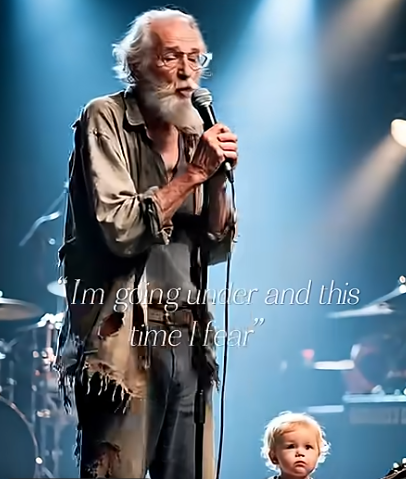
The lights dimmed, and the gentle hum of anticipation filled the air. The stage was set, but no one expected what they were about to witness. Out of the shadows walked an elderly man, his steps slow but steady, leaning slightly on the microphone stand for support. His clothes were worn, his silver hair messy, and his eyes carried the weight of a thousand untold stories.
Behind him, holding a guitar far too big for his tiny hands, toddled a small boy — no more than four years old. The audience instantly fell silent, sensing that something extraordinary was about to happen.
The old man gripped the microphone, his hands trembling slightly, and closed his eyes for a moment. Then, in a voice soft and cracked with time, he whispered, “This is a song about love, loss, and everything we carry with us.”
The music began, slow and tender, and his voice followed — raspy yet filled with a raw honesty that pierced straight through the heart. He sang about dreams left behind, about roads walked alone, and about finding unexpected hope in the unlikeliest places.
The little boy, standing beside him, strummed his tiny guitar with uncoordinated fingers. At first, it was clumsy, but as the song unfolded, something magical happened. The boy’s playing became steady, in rhythm with the melody, as though the music had always lived inside him.
The audience watched in awe as the two — generations apart — told a story without words. The man’s voice trembled on certain notes, carrying the weight of years and heartbreak, while the child’s soft strumming added a fragile layer of innocence and hope.
Midway through the performance, the old man opened his eyes and looked down at the boy, his face softening into the faintest smile. In that gaze, the audience saw everything: love, pride, and the unspoken promise that music — like memory — transcends time.
By the final verse, something strange began to happen in the room. Grown men blinked rapidly to hide their tears. Women clutched their hands to their chests. Even the judges, so used to perfection and polish, sat motionless, caught between heartbreak and wonder.
When the last note faded into silence, the man lowered his microphone. The boy looked up at him, eyes wide, as if asking, “Did we do it right?” The old man knelt, placed his hand on the boy’s shoulder, and whispered something only he could hear.
And then — as though the entire room had been holding its breath — the audience erupted into thunderous applause. People were on their feet, clapping, crying, cheering.
That night, no one remembered the lights, the stage, or the setlist. What they remembered was the sound of a trembling voice paired with a tiny guitar, and how two souls — one at the end of his journey and one just beginning — met perfectly in the middle.
It wasn’t just a performance. It was a reminder that music heals, connects, and keeps our stories alive.