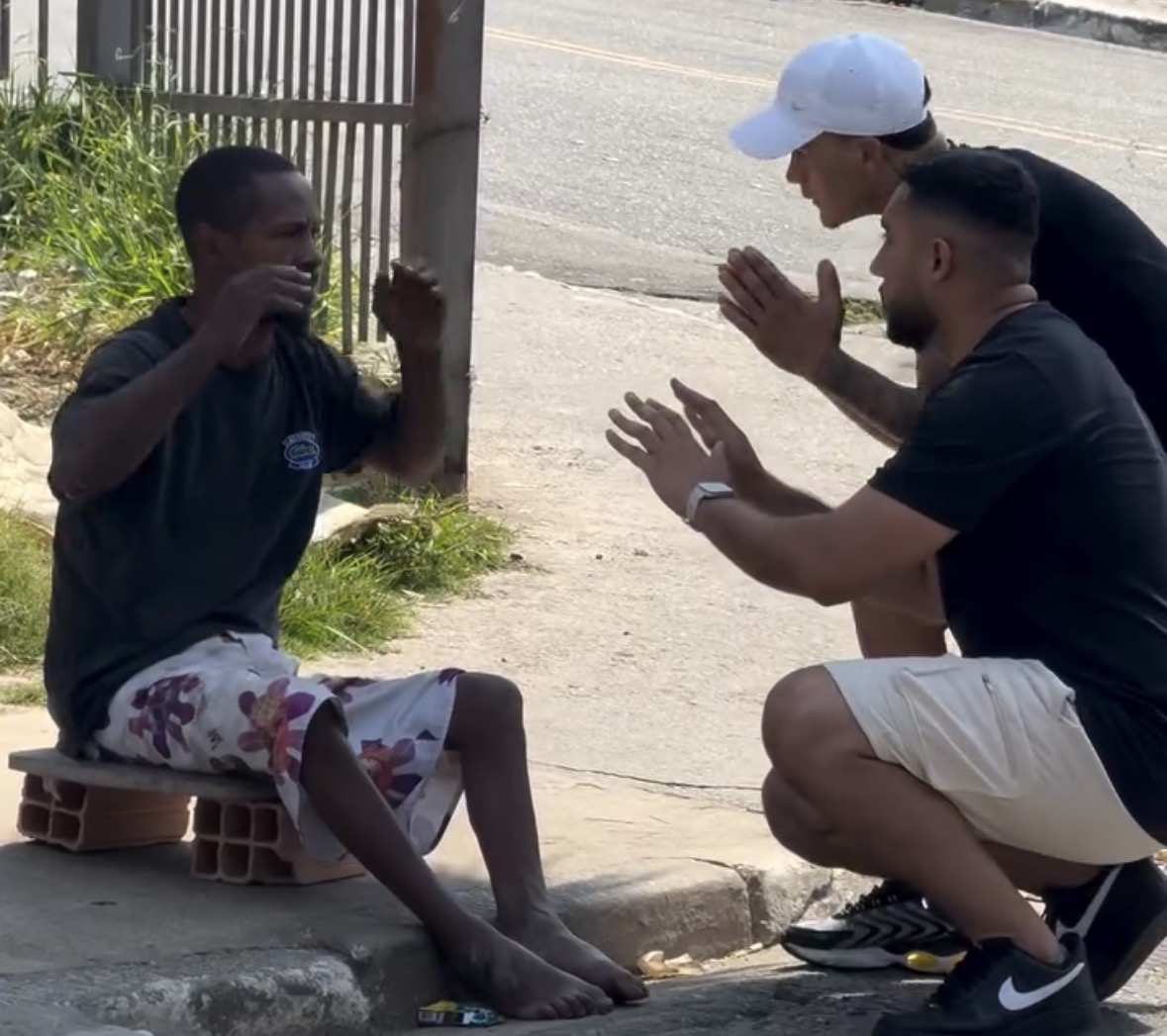
The lights dimmed, and a hush fell over the stage. A single spotlight revealed a man standing alone, clutching a worn-out microphone as though it was the only thing tethering him to this world. His clothes were torn, his hands calloused, his face lined with stories untold.
For a moment, he didn’t move. He just stood there, head bowed, breathing heavily, as if gathering the strength to face his past. The audience exchanged uncertain glances, sensing they were about to witness something unusual — something far deeper than a simple performance.
Then he raised his head, and his eyes, though tired and weathered, burned with a quiet intensity. Without an introduction, he began to sing.
The first note was rough, jagged, almost breaking under its own weight. But within seconds, his voice settled into something hauntingly beautiful — cracked yet powerful, fragile yet commanding. He sang with a rawness that pierced the air and reached straight into the hearts of everyone present.
The lyrics spoke of loss, of regret, of nights spent wandering through endless darkness searching for meaning. His words carried the kind of pain that cannot be faked — the pain of someone who had lived through storms and had the scars to prove it.
“I’m going under, and this time I fear…”
As those words left his lips, you could feel the entire audience leaning in, holding their breath, as though the room itself was afraid to interrupt his confession. The stage lights glimmered against his sweat-soaked face, illuminating every wrinkle, every tear, every battle etched into his skin.
In that moment, he wasn’t just singing a song. He was opening a door to his soul.
There was no band, no elaborate backdrop, no distractions. Just his voice, the microphone, and the silence between each note. And somehow, that simplicity made it more powerful than any grand spectacle could ever be.
Midway through the song, his voice faltered, trembling under the weight of his own emotions. He closed his eyes, gripped the microphone tighter, and pushed forward. That struggle — that refusal to break — sent chills through the room.
In the front row, an elderly woman wiped away tears, whispering something to the person beside her. A young man buried his face in his hands. Even the judges sat frozen, captivated not by technical perfection but by raw, unfiltered humanity.
By the time he reached the final verse, his voice cracked completely, shattering into fragments of sorrow and hope intertwined. But instead of hiding the break, he embraced it, letting it pour into the song like rain into dry soil.
When the last note faded, silence filled the air — heavy, reverent, and endless. Then, as though a dam had burst, the room erupted into applause, rising like a wave, crashing over him with love and awe.
For that man, it wasn’t about winning or losing. It wasn’t even about the stage. That song was his redemption, his confession, his way of telling the world: “I’m still here.”